
From its inception AFFORD questioned what development could mean and could be:
“Development is a difficult concept to define…perhaps we could start by attempting to place development in its historical context. Africans have always had prime responsibility for shaping their own destiny…So AFFORD’s main interest is in helping to build the sort of institutions that people can use to effectively advance their own interests in developmental terms…Again, thinking historically, we know that Africans away from the continent-in the diaspora-have long played important parts in African affairs and that is a tradition we wish to continue, in the best spirit of that tradition…Thus for AFFORD, Africans in the diaspora are very much part of Africa’s development and should play a more central role…So, in sum, for AFFORD, development is a people-centred, holistic process that involves people talking together, working together to make the choices that best suit their interests taking into account the diverse and legitimate views that exist.”
AFFORD, 1997:4
Key to AFFORD’s work has been the desire to change how Africa as a place is seen and positioned, particularly in the UK and Europe. Part of this agenda, as well as shifting the focus of what development can mean, has been AFFORD’s work focusing on job creation and investment, rather than aid. AFFORD recognised that the diaspora could contribute to job creation and business development in a variety of ways, detailed in the documents here:
Archival material
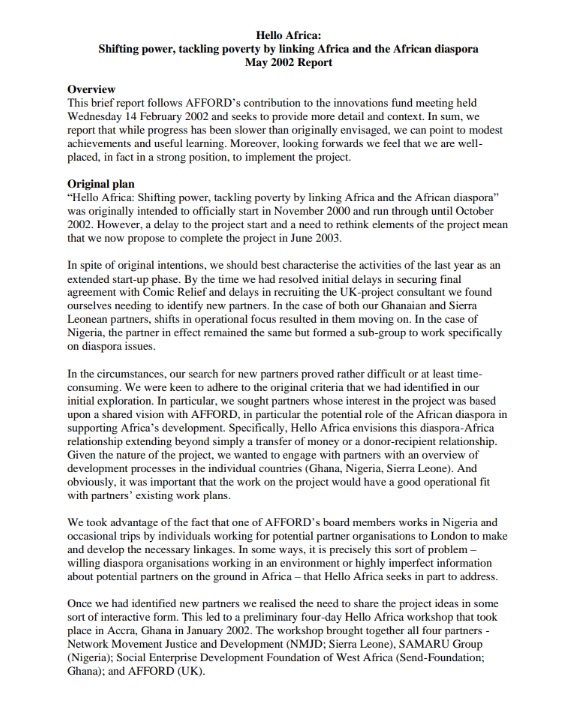
The Hello Africa project (2001 – 2003) tried to find out about the priorities of local people and how to partner with African organisations around those priorities.
From 2006 – 2011 AFFORD ran the SEEDA volunteers programme, which supported diaspora resource persons to support SMEs and job creation in Africa.
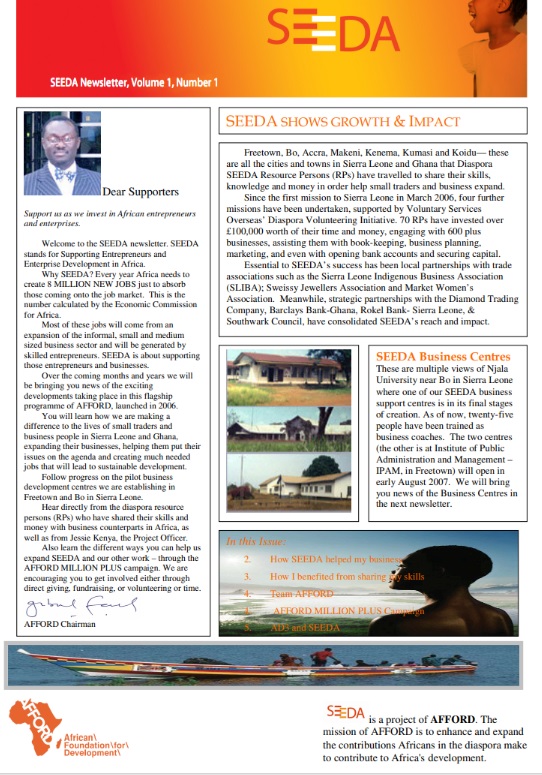
The first SEEDA newsletter details the impact of SEEDA for businesses, for small traders in Sierra Leone and Ghana and for resource persons from the diaspora.
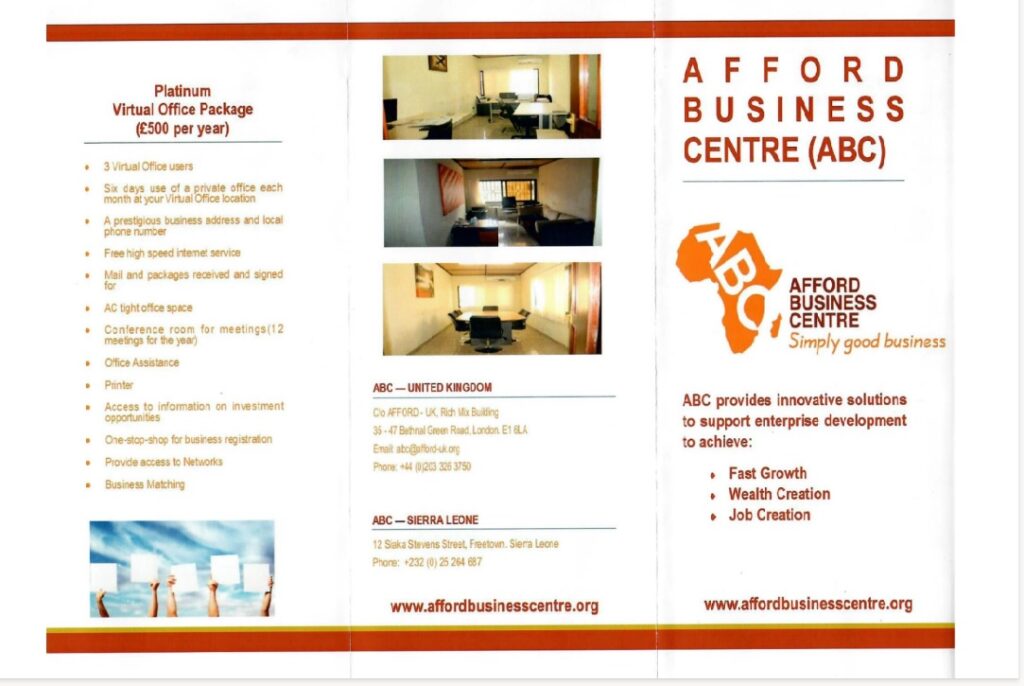
This emphasis on jobs and business as a primary mode of development can also be seen in the AFFORD Business Club (ABC), beginning with the ABC Sierra Leone in 2011.
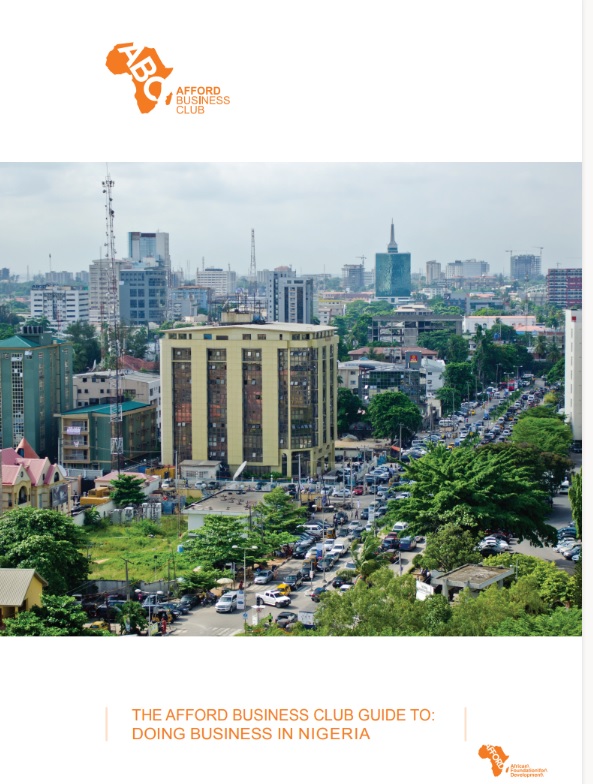
This guide from 2018 demonstrates one aspect of the AFFORD Business Club providing business support and guidance for diaspora investment in Nigeria.
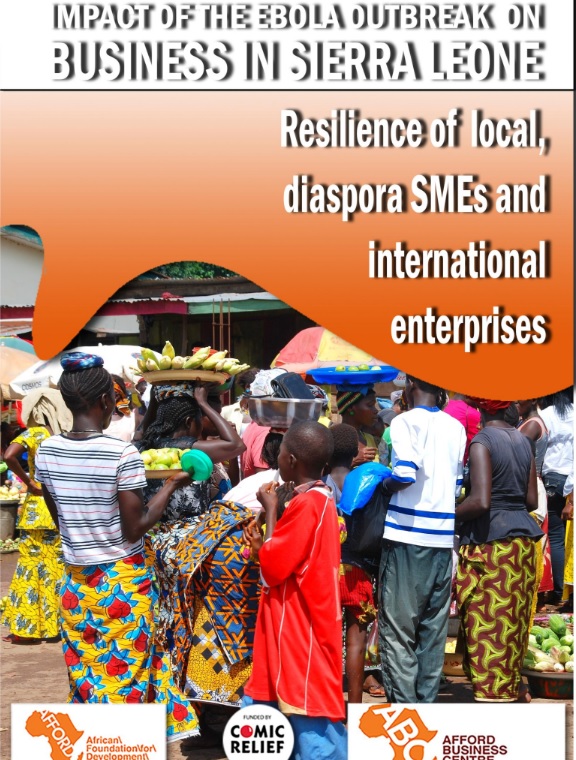
The 2016 report details research conducted through the ABC project on the impact of the Ebola outbreak on SMEs in Sierra Leone.
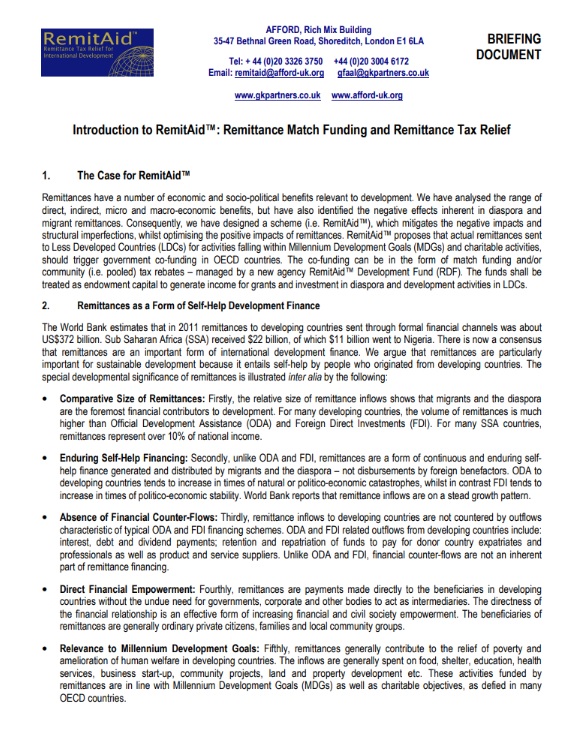
AFFORD’s RemitAid initiative looked to reduce the negatives of remittances and accentuate the positives.
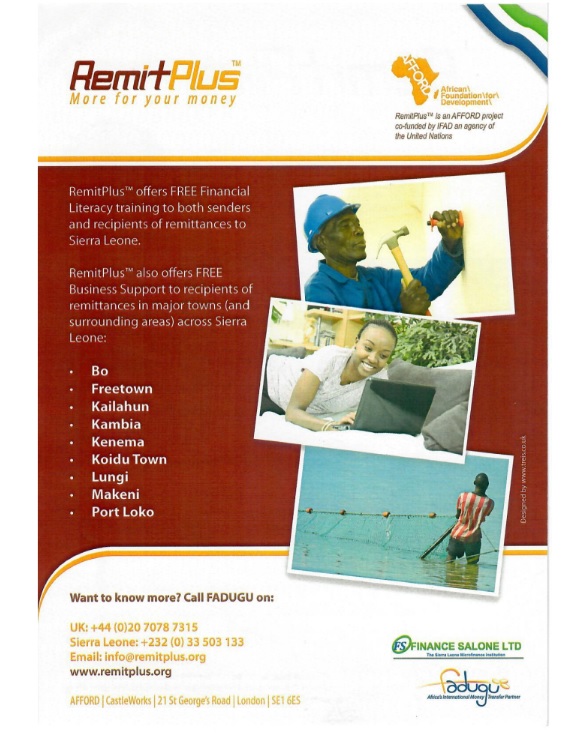
A pamphlet detailing the RemitPus initiative in Sierra Leone, offering free financial literacy training to remittance recipients.
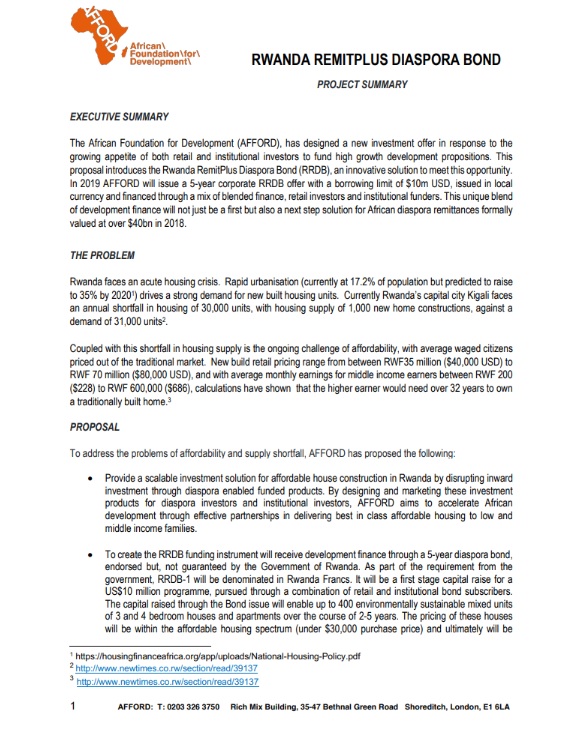
In 2019 AFFORD introduced the Rwanda RemitPlus Diaspora Bond as an investment solution to affordable housing in Rwanda.
This factsheet (2018) details the potential of RemitPlus ideas for the Sierra Leonean remittance ecosystem.