
“I think the difference between when I joined AFFORD and where we are now is just that the idea of diaspora and development, migration and development, is now accepted in international discourse and also in funding and in policy spaces from the UN downwards really. We’re seeing a massive, monumental shift so that these things that we’re doing privately is now part of the policymaking process, hence being incorporated into the SDGs.”
Onyekachi Wambu, February 2023
The rise of AFFORD has both witnessed and been part of a major shift in understandings of the migration-development nexus. Moving from ideas of brain-drain to the potential of migration (and ‘migrants’) to contribute to countries and regions of heritage, AFFORD was both part of this new approach and worked to generate new knowledge and challenge existing discourses about the role of diasporic communities in the global development context. AFFORD has also pushed for greater acknowledgement, visibility and legitimacy for diasporic communities and organisations within the development landscape.
AFFORD’s input was particularly key in the late 1990s and early 2000s, as the newly formed Department for International Development (DfID) set out its priorities, writing in their 1997 annual report:
“The election of a New Labour government in the UK in 1997 signalled a new approach to the government’s development policy. Development was upgraded to a cabinet post (no longer an arm of the Foreign and Commonwealth Office headed by a junior minister), and Clare Short was appointed Secretary for International Development. DFID duly published a White Paper entitled Eliminating World Poverty: A Challenge for the 21st Century… Particularly significant from AFFORD’s viewpoint was DFID’s commitment ‘to seek to build on the skills and talents of migrants and other members of ethnic minorities within the UK to promote the development of their countries of origin’ (panel 23, page 68). As a result, we submitted evidence to the House of Commons International Development Committee welcoming the commitment and drawing attention to the findings of our report (thanks to Donna for agreeing to take this on at very short notice). It seems that the Committee appreciated our intervention because in its subsequent report to the government, it drew attention to AFFORD’s comments and the comments by the Black International Construction Organisation (BICO) and recommended ‘that further detail be provided in the Government response of how ethnic minority and refugee groups in the United Kingdom are to be involved in the development process’. Clearly an opportunity exists for AFFORD and similar organisations to contribute to government thinking on this important issue.” (AFFORD, 1997, 1.1.13: 3-4).
AFFORD subsequently submitted a memorandum of evidence to the International Development Select Committee on migration and development, outlining AFFORD’s desire to ‘offer concrete policy recommendations, directed primarily at DfID’, with AFFORD encouraging DfID to ‘embrace a diversity of approaches that emanate from civil society on what constitutes development’ articulating the need to ‘connect [diasporas] own welfare needs here with the desires/obligations to support families/communities in their region of origin’. Chukwu-Emeka Chikezie, one of AFFORD’s co-founder acted as a witness to the International Development Select Committee inquiry into migration and development.
AFFORD continued to engage in various policy spaces, including through parliamentary processes, the Global Forum for Migration & Development and the Department for International Development as the archival material below details.
Archival material
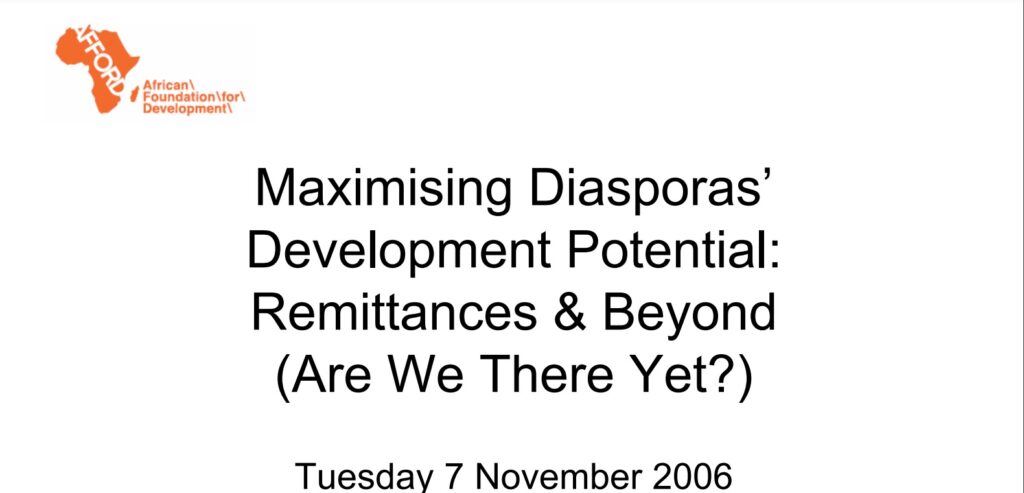
A presentation AFFORD co-founder Chukwu-Emeka Chikezie gave to the Department for International Development (DfID) in 2006 on diaspora engagement in development.
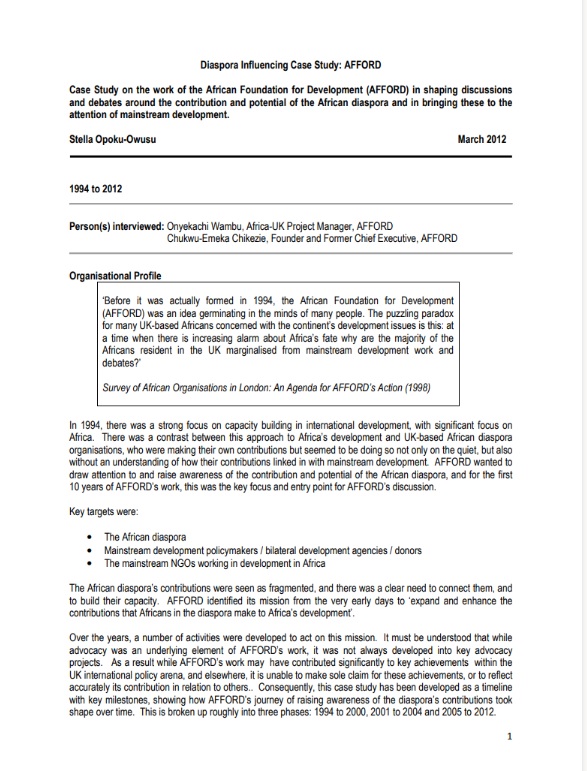
In 2012 AFFORD documented their previous engagement in policy spaces including engaging with mainstream NGOs and the International Development Select Committee.
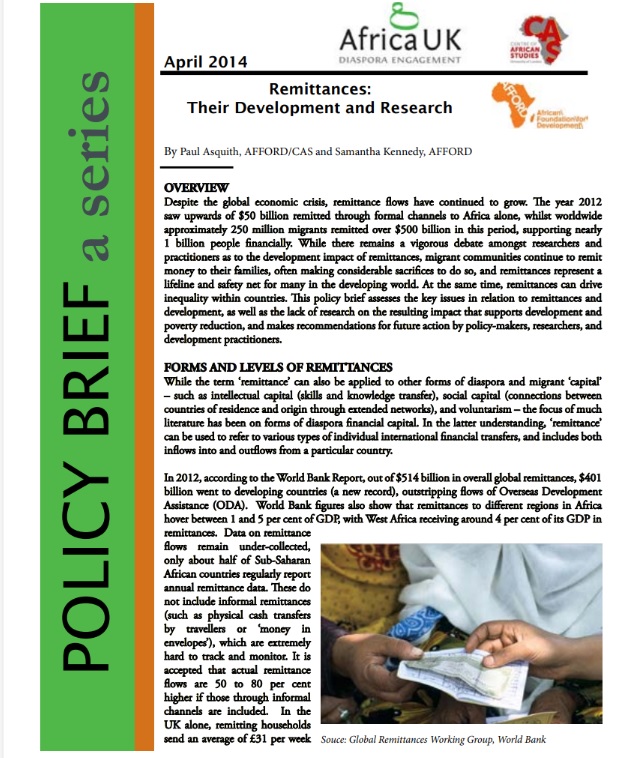
A policy brief from 2014 detailing the role of remittances in development and making recommendations for governments, academic institutions and diaspora organisations.
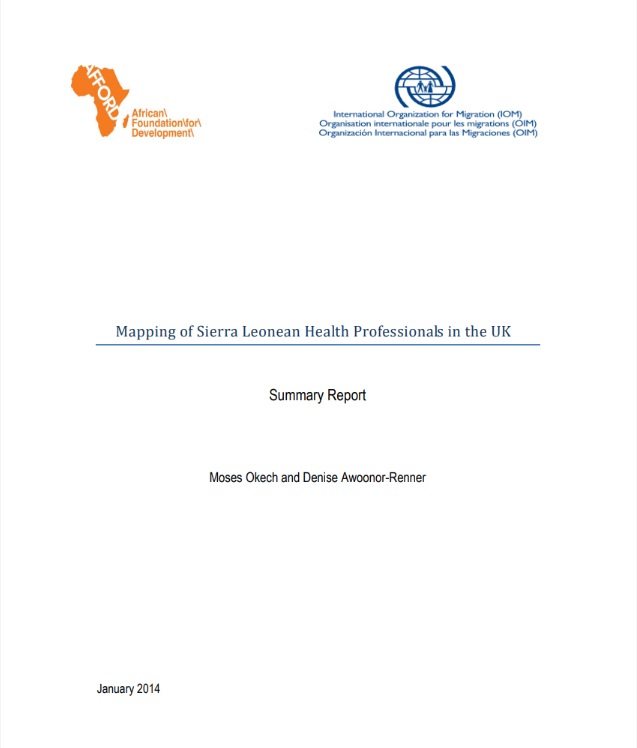
AFFORD also work on diasporic mapping. Here they map Sierra Leonean health professionals in the UK and make recommendations about their engagement in development.
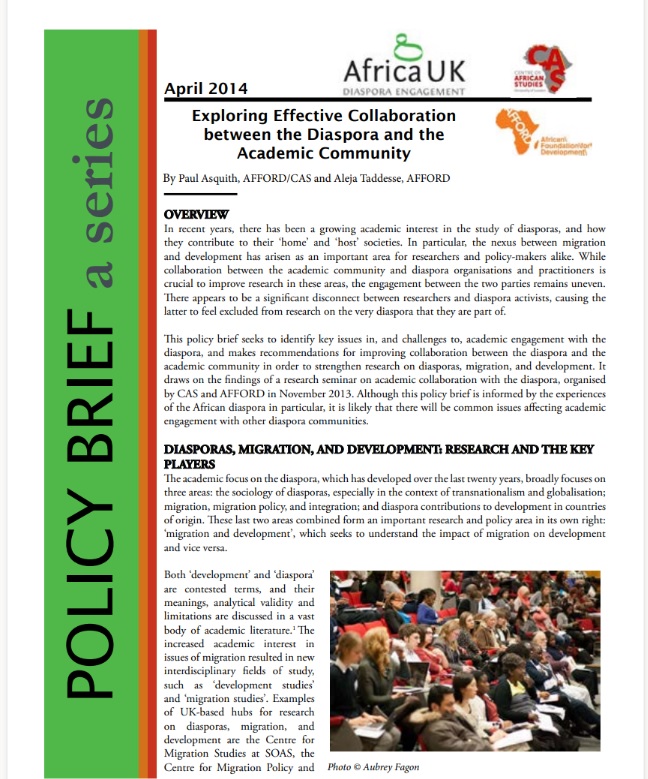
A policy brief (2014) which considers how diaspora groups and academics can work together, detailing some of the challenges and making suggestions to improve these relationships.
A 2016 background paper on diaspora entrepreneurship and what that can mean for the African continent.
Report from the APPG Diaspora, Development and Migration 2016 event entitled: ‘When is a refugee not a refugee?
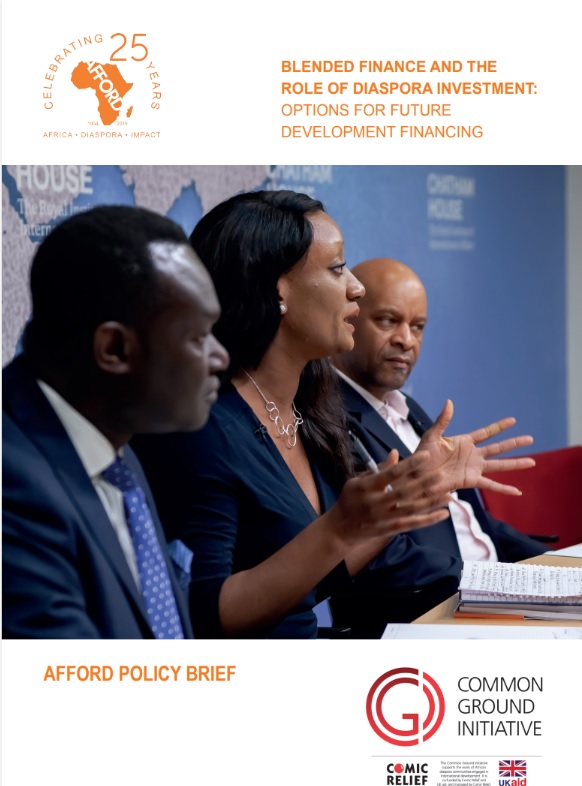
A 2019 policy brief on blended finance and the role diaspora investment for the future of development financing.
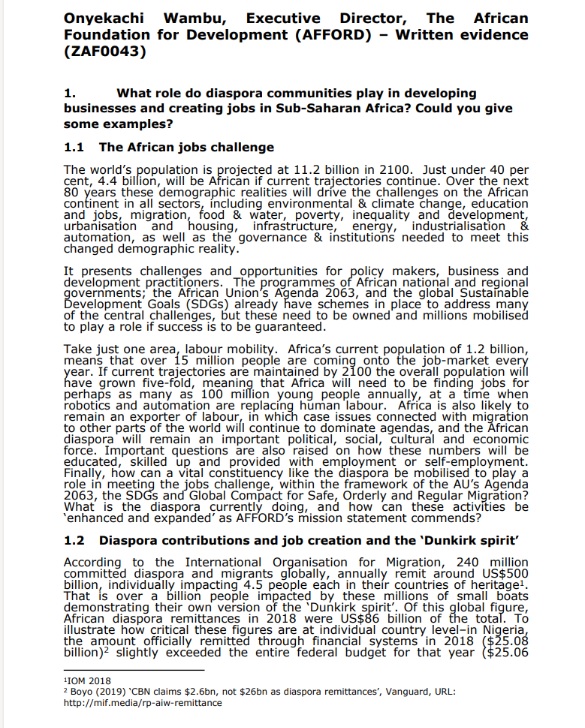
In 2020 AFFORD submitted evidence to the parliamentary enquiry on diaspora engagement and job creation in Africa.
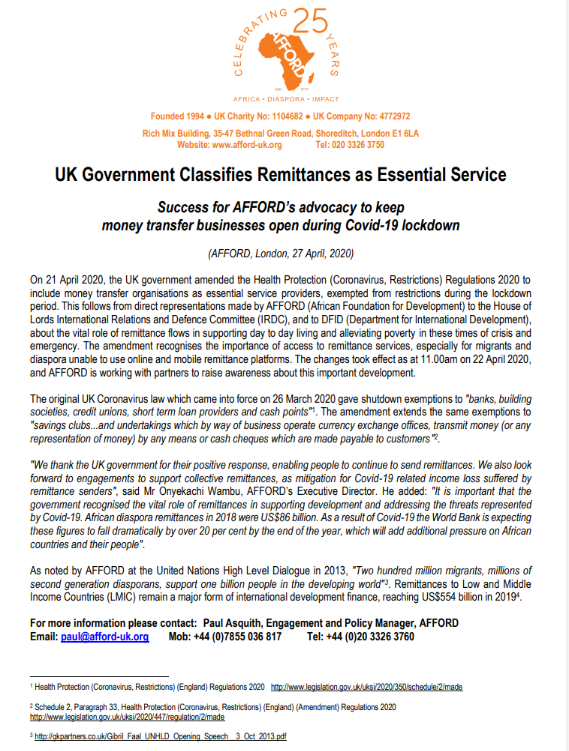
A 2020 press release detailing AFFORD’s role in supporting remittance provision as an essential service during Covid19.